 Outdoors Nearby
Accessible and inclusive playgrounds near you
1,082 playgrounds in 50 states that are mapped as wheelchair accessible, built for all abilities or designed around sensory play. Search by city or ZIP, or browse the list by state.
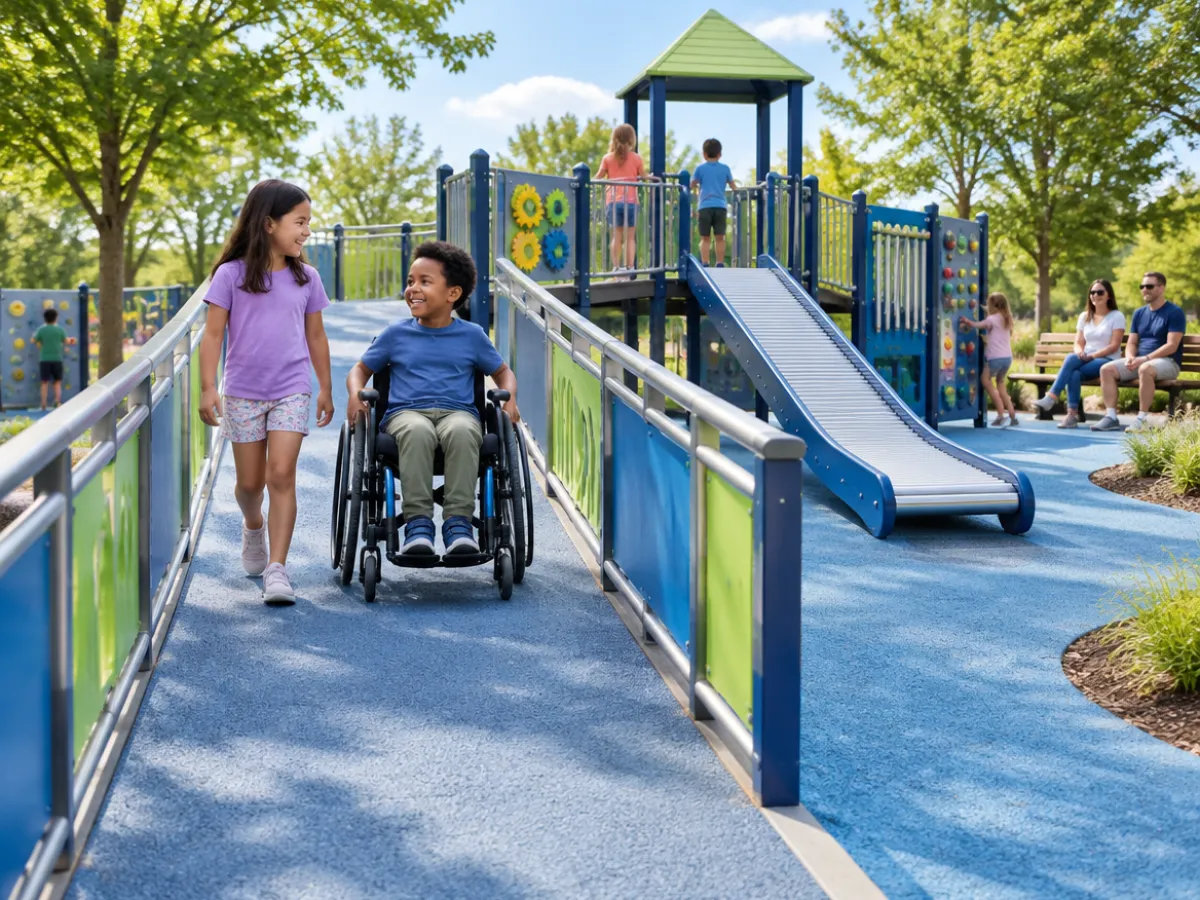
Find an accessible playground near you
Accessible playgrounds by state
- Alabama 9
- Alaska 6
- Arizona 15
- Arkansas 16
- California 167
- Colorado 27
- Connecticut 11
- Delaware 3
- Florida 28
- Georgia 19
- Hawaii 3
- Idaho 15
- Illinois 51
- Indiana 20
- Iowa 16
- Kansas 18
- Kentucky 15
- Louisiana 8
- Maine 2
- Maryland 22
- Massachusetts 46
- Michigan 44
- Minnesota 28
- Mississippi 4
- Missouri 24
- Montana 9
- Nebraska 5
- Nevada 19
- New Hampshire 6
- New Jersey 18
- New Mexico 4
- New York 88
- North Carolina 29
- North Dakota 4
- Ohio 39
- Oklahoma 4
- Oregon 20
- Pennsylvania 21
- Rhode Island 4
- South Carolina 11
- South Dakota 4
- Tennessee 12
- Texas 51
- Utah 24
- Vermont 1
- Virginia 15
- Washington 47
- West Virginia 7
- Wisconsin 18
- Wyoming 5
Inclusive and sensory playgrounds
These were built for kids of all abilities to play side by side. Many have a story: a local family, a foundation like Magical Bridge or Shane's Inspiration, or a city that rebuilt an old playground from scratch.
- Red-Tailed Hawk Park Inclusive Playground Inclusive
adaptive swing, merry-go-round (accessible), music play, ramps, rubber surface
Inclusive play with a sensory garden, splash pad and wetland boardwalk.
- Magical Bridge Playground Inclusive
adaptive swing, merry-go-round (accessible), music play, quiet space, ramps
The original Magical Bridge site, with five play zones and a ramped two-story playhouse.
- Magical Moments Playground Inclusive
adaptive swing, parking nearby, ramps, rubber surface, sensory play
Described as North Dakota's first inclusive playground.
- Martin's Park Inclusive
adaptive swing, merry-go-round (accessible), music play, ramps, sensory play
Nature-themed inclusive park with a shipwreck and garden splash area.
- Schooley Mill Playground Inclusive
accessible restroom, adaptive swing, fenced, merry-go-round (accessible), music play
Farm-themed renovated playground.
- Vale-Asche Foundation Playground Without Limits at Memorial Park Inclusive
braille/tactile, fenced, ramps, rubber surface, sensory play
Houston's first Playground Without Limits, fully accessible with a glider.
- All Abilities Playground Inclusive
adaptive swing, ground-level play, ramps, rubber surface, sensory play
Large 30,000 sq ft all-abilities playground with wide ramps and sensory pieces.
- Blackbob Park Playground Inclusive
adaptive swing, merry-go-round (accessible), music play, ramps, shade
- Centennial Park North Playground Inclusive
accessible restroom, adaptive swing, music play, ramps, rubber surface
Zero-G swing chair, communication board and a sensory trail.
- Dobson Ranch Park Playground Inclusive
accessible restroom, music play, quiet space, ramps, rubber surface
10,000 sq ft with ramps, quiet cocoon spots, a zipline and ADA restrooms.
- Field of Dreams Playground Inclusive
adaptive swing, merry-go-round (accessible), music play, ramps, sensory play
St. Johns County's first all-inclusive playground.
- Harmon Park Playground Inclusive
adaptive swing, merry-go-round (accessible), music play, ramps, shade
- High Point Athletic Complex Inclusive Playground Inclusive
accessible restroom, adaptive swing, ramps, sensory play, shade
- Hope Playground Inclusive
accessible restroom, adaptive swing, braille/tactile, merry-go-round (accessible), sensory play
Tulsa's first all-inclusive playground, with a guide track for low-vision visitors.
- Inclusive Playground at Blendon Woods Metro Park Inclusive
accessible restroom, fenced, music play, ramps, sensory play
Fenced Metro Parks playground with a universal changing table and hoist.
- Laman Plaza Playground Inclusive
accessible restroom, adaptive swing, fenced, merry-go-round (accessible), music play
Gated inclusive playground beside the Laman Library.
- Malcolm X Park Playground Inclusive
adaptive swing, merry-go-round (accessible), music play, ramps, sensory play
Stair-free access to all levels plus a wheelchair merry-go-round in Roxbury.
- Oakledge Park Universally Accessible Playground Inclusive
accessible restroom, adaptive swing, merry-go-round (accessible), music play, quiet space
Natural playscape with high color contrast and quiet green areas.
- One Heart Playground Inclusive
accessible restroom, fenced, merry-go-round (accessible), music play, rubber surface
Fenced inclusive playground with a wheelchair swing and communication board.
- Thomas M. Menino Park Inclusive
adaptive swing, merry-go-round (accessible), music play, ramps, sensory play
Charlestown park with an accessible merry-go-round and wheelchair swing.
- 36th Meridian Community Park Playground Inclusive
adaptive swing, quiet space, ramps, rubber surface, sensory play
Barn-themed structure with rubber hills and cozy spaces underneath.
- A Park Above Inclusive
adaptive swing, music play, shade, splash pad, wheelchair swing
Fully inclusive park with shade structures and a splash pad.
- Adventures for Angels Inclusive
adaptive swing, braille/tactile, music play, ramps, rubber surface
Ramp system, high-back swings and a braille clock.
- All-Children's Playground Inclusive
adaptive swing, braille/tactile, fenced, ramps, rubber surface
Fenced, ramped playground with braille panels and scented plants.
- Artists at Play Playground Inclusive
adaptive swing, merry-go-round (accessible), music play, turf surface
Bucket swings, a wheelchair spinner and turf hills by the Space Needle.
- Blandair Regional Park Playground Inclusive
accessible restroom, merry-go-round (accessible), rubber surface, shade
Zero-entry merry-go-round and communication boards.
- Boundless Playground Inclusive
accessible restroom, fenced, ground-level play, ramps, splash pad
Fenced Boundless playground with barrier-free sprinklers and restrooms.
- College Boulevard Activity Center Playground Inclusive
braille/tactile, merry-go-round (accessible), ramps, rubber surface, shade
Variety KC baseball-themed playground with a braille board.
- Evergreen Rotary Park Inclusive Playground Inclusive
adaptive swing, braille/tactile, merry-go-round (accessible), ramps, sensory play
Sensory panels with braille, sign language and picture symbols.
- Forest Park Playground Inclusive
adaptive swing, merry-go-round (accessible), quiet space, ramps, sensory play
Accessible spinner and teeter-totter, bucket swings and a dome hideout.
- Harambee Park Boundless Playground Inclusive
adaptive swing, merry-go-round (accessible), music play, ramps, transfer station
Boundless playground in Dorchester with a raised gazebo for caregivers.
- Inclusive Playground "Eric's Place" Inclusive
merry-go-round (accessible), ramps, turf surface, wheelchair swing
- Kids Together Playground Inclusive
accessible restroom, adaptive swing, fenced, ramps
Accessible sand table, glider and an adult-size changing table.
- LuBird's Playground Inclusive
adaptive swing, merry-go-round (accessible), ramps, rubber surface, sensory play
About 9,000 sq ft with a treehouse, roller slides and accessible spinners.
- Madison's Place Inclusive
adaptive swing, ramps, sensory play, shade, splash pad
16,000 sq ft with shaded, ramped decks.
- Magical Bridge Playground Inclusive
adaptive swing, merry-go-round (accessible), music play, rubber surface, turf surface
Inclusive playground with a musical harp, water play for tots and a wheelchair-friendly spinner.
- Mahoney Park Inclusive Playground Inclusive
accessible restroom, fenced, ground-level play, rubber surface, splash pad
Lincoln's first fully inclusive playground, about an acre and enclosed.
- Meadowbrook Park Playground Inclusive
fenced, merry-go-round (accessible), music play, ramps, turf surface
- NDAD Park Inclusive Playground Inclusive
adaptive swing, ramps, rubber surface, sensory play, transfer station
Sensory tunnel, orb rocker and a freedom swing seat.
- Noah's Playground for Everyone Inclusive
adaptive swing, braille/tactile, quiet space, ramps, sensory play
Ramped central play hill, braille boards and quiet nooks near the lake.
- Recreation Park Playground Inclusive
merry-go-round (accessible), music play, ramps, rubber surface, shade
- Rotary PlayGarden Playground Inclusive
adaptive swing, fenced, merry-go-round (accessible), ramps
Fenced all-abilities garden playground with a carousel that holds two wheelchairs.
- Savage Park Playground Inclusive
accessible restroom, braille/tactile, music play, rubber surface, sensory play
- Up in the AIR Inclusive Playground Inclusive
accessible restroom, adaptive swing, ramps, rubber surface, sensory play
Guilford County's first inclusive playground.
- Variety KC Inclusive Playground Inclusive
adaptive swing, fenced, merry-go-round (accessible), music play, ramps
Baseball-themed fenced playground funded with Variety KC.
- Wabun Picnic Area Playground Inclusive
music play, ramps, rubber surface, sensory play, shade
Wide rubber ramps, musical panels and a wheelchair glider.
- Watsessing Park All-Access Playground Inclusive
adaptive swing, merry-go-round (accessible), music play, ramps, sensory play
Essex County all-access playground with a roll-on glider and big xylophones.
- All Together Playground Inclusive
adaptive swing, merry-go-round (accessible), ramps, sensory play
19,000+ sq ft storybook-themed inclusive playground.
- Ann Eisemann Inclusive Playground Inclusive
adaptive swing, merry-go-round (accessible), rubber surface, sensory play
11,000 sq ft with four swing types and an adaptive merry-go-round.
- Arrowhead Meadows Park Playground Inclusive
adaptive swing, ground-level play, music play, ramps
Extra-wide ramps let two wheelchairs pass; musical play and ground-level activities.
- Brittingham Park Inclusive Playground Inclusive
braille/tactile, quiet space, ramps, rubber surface
Madison's first all-inclusive playground, near downtown.
- Clemyjontri Park Playground Inclusive
adaptive swing, merry-go-round (accessible), ramps
Fairfax County's all-abilities park with a ground-level carousel.
- Fort Worth Dream Park Inclusive
adaptive swing, fenced, merry-go-round (accessible), quiet space
57,000 sq ft fenced inclusive park with quiet domes and a bucket-seat zipline.
- Freedom Playground Inclusive
accessible restroom, adaptive swing, music play, ramps
- Gateway Discovery Park Inclusive
adaptive swing, ramps, splash pad, turf surface
Ramped double slides, turf hills and an adaptive swing.
- Hawk's Nest Playground Inclusive
merry-go-round (accessible), music play, ramps, shade
- Hobble Creek Playground Inclusive
adaptive swing, braille/tactile, music play, rubber surface
Harness swing seat and AAC communication board in braille, English and Spanish.
- Independence Park Playground Inclusive
braille/tactile, quiet space, rubber surface
100+ accessible components; glider fits two wheelchairs.
- Inspiration Playground Inclusive
adaptive swing, merry-go-round (accessible), ramps, sensory play
Inclusive downtown playground with ramps and accessible spinner.
- Joseph A. Dyke Playground Inclusive
adaptive swing, ramps, rubber surface, shade
Wheelchair-accessible sandbox and built-in ramps.
- Jude's Place Inclusive
adaptive swing, merry-go-round (accessible), music play, rubber surface
Called Maine's first universally accessible public playground.
- Legacy Playground Inclusive
adaptive swing, merry-go-round (accessible), ramps, sensory play
Inclusive carousel, accessible seesaw and ramped slide.
- Mary's Magical Place Inclusive
merry-go-round (accessible), music play, ramps, sensory play
Adaptive teeter-totter, merry-go-round and roller table.
- Meadow Crest Playground Inclusive
adaptive swing, merry-go-round (accessible), ramps, sensory play
Open to the public only when the neighboring school is out.
- Milton A. Votee Park Playground Inclusive
adaptive swing, fenced, ground-level play, ramps
Sign-language play panels and park-wide ramps.
- Mission Bay Park Playground Inclusive
adaptive swing, merry-go-round (accessible), ramps
Waterfront playground with an accessible zipline and play island pathways.
- Mohawk Park Playground Inclusive
adaptive swing, music play, ramps, shade
- Mothers on a Mission Playground Inclusive
adaptive swing, ramps, rubber surface, sensory play
Built by local mothers, with a glider that fits two wheelchairs.
- Play for All Playground Inclusive
adaptive swing, ground-level play, merry-go-round (accessible), sensory play
East Baton Rouge's first all-inclusive playground, with tactile and sound play.
- Pole Green Park Playground Inclusive
adaptive swing, fenced, ramps, rubber surface
- Clement Park Inclusive Playground Inclusive
adaptive swing, merry-go-round (accessible), ramps
Adaptive swings, a zero-step merry-go-round and many ramps.
- Ronan McElligott Memorial Playground Inclusive
adaptive swing, music play, ramps, sensory play
Wheelchair access to the top deck and supportive swings.
- Saul Alexander Playground Inclusive
merry-go-round (accessible), music play, quiet space, sensory play
Inclusive whirl, zip track and a quiet zone for sensory needs.
- Shawnee Mission Park Inclusive Playground Inclusive
adaptive swing, fenced, music play, rubber surface
Fenced inclusive playground with misters in a large county park.
- Strang Park Playground Inclusive
adaptive swing, fenced, shade, turf surface
In-ground trampolines, turf hills and an adaptive teeter-totter.
- Taylor's Dream Boundless Playground Inclusive
quiet space, ramps, sensory play, transfer station
Boundless playground with a communication sign and quiet spaces.
- Thurmont Community Park Playground Inclusive
adaptive swing, quiet space, ramps, rubber surface
Ramp-accessible equipment with step-free connection to the park.
- Universal Universe Playground Inclusive
merry-go-round (accessible), music play, ramps, sensory play
Solar-system theme with textured paths and sound play.
- Variety Star Playground Inclusive
adaptive swing, ramps, rubber surface
Carnival-themed with an accessible zipline.
- Veteran's Memorial Park Playground Inclusive
fenced, merry-go-round (accessible), ramps, shade
Accessible zipline and shade sails inside a fence.
- Wallace Park Playground Inclusive
adaptive swing, merry-go-round (accessible), ramps, turf surface
Planned for spring 2026; confirm opening before listing.
- Adventure Island Playground Inclusive
music play, ramps, splash pad
Ramps, a splash pad and a musical sound garden.
- Amelia Grace Place Inclusive
adaptive swing, braille/tactile, ramps
Open to the public outside school hours.
- B.K.'s Playground Inclusive
accessible restroom, ramps, wheelchair swing
Wheelchair swing, wide ramps and an adult changing table.
- Bill Adelson Playground Inclusive
adaptive swing, ramps, transfer station
Two inclusive playgrounds within walking distance.
- Boundless Adventures Playground Inclusive
adaptive swing, rubber surface, sensory play
Boundless playground in a sensory garden park, with a wheelchair glider.
- Boundless Playground Inclusive
accessible restroom, parking nearby, shade
Shaded Boundless playground with ADA equipment and restrooms.
- Bradley's Fun for All Playground Inclusive
accessible restroom, adaptive swing, rubber surface
- Brooklyn's Playground Inclusive
adaptive swing, ramps, rubber surface
14,000 sq ft of rubber surfacing with wide walkways.
- Bruce Ladner Memorial Park Playground Inclusive
accessible restroom, adaptive swing, sensory play
Disability Connection playground, the first inclusive playground on the Mississippi Gulf Coast.
- Cassia Park Playground Inclusive
adaptive swing, music play, sensory play
- Central Park Playground Inclusive
adaptive swing, ramps, sensory play
Train-themed with extra-wide ramps and a wheelchair glider.
- Champions Park Playground Inclusive
adaptive swing, ground-level play, parking nearby
Single-level inclusive playground in Northeast Philadelphia.
- Chanshtnu Muldoon Park Playground Inclusive
adaptive swing, music play, rubber surface
Net climber, grass spinners, instruments and oodle swings.
- Chaparral Park Playground Inclusive
adaptive swing, ramps, sensory play
Supportive swings, sensory gear and wide ramps.
- Children's Home of Pittsburgh Inclusive Playground Inclusive
ground-level play, music play, rubber surface
Nonprofit-run; check visiting hours before going.
- Courtney's SandCastle Inclusive
accessible restroom, fenced, sensory play
Gated universally accessible playground with a sensory garden.
- Dearborn Pass Park Playground Inclusive
music play, ramps, sensory play
Accessible bridge plus tactile and musical play panels.
- Endres Park All-Inclusive Playground Inclusive
fenced, rubber surface, shade
Peoria Park District playground with cushioned flooring and fencing.
- Everyone's Playground Inclusive
accessible restroom, fenced, music play
Fenced castle-themed inclusive playground.
- Fairmount Park Carousel Playground Inclusive
music play, sensory play, splash pad
Built with Shane's Inspiration, with a carousel and splash pad.
- Universally Accessible Playground Inclusive
ramps, rubber surface
5,500 sq ft playground with long platforms and bonded rubber surface.
- Fischer Fun Park 2 Inclusive
music play, rubber surface, sensory play
Wheelchair-accessible rocking boat and spinner plus a giant fish bridge.
- Fore River Field Playground Inclusive
ground-level play, music play, ramps
Wide walkways, accessible seesaw and ground-level chimes.
- Freedom Trail Park Playground Inclusive
ramps, rubber surface, sensory play
Wide ramps and a sensory garden with thousands of plants.
- Harper's Playground Inclusive
adaptive swing, ground-level play, music play
Ground-level play, sand and water station and a big xylophone.
- Hope Park Inclusive
rubber surface, sensory play, splash pad
Inclusive park with sensory area, adaptive gear and separate tot lot.
- Horizons All-Inclusive Playground Inclusive
adaptive swing, music play, ramps
Multi-phase inclusive park with lie-down swings and instruments.
- Hui Aloha Playground Inclusive
adaptive swing, ramps, rubber surface
- imPOSSIBLE Dream Playground Inclusive
adaptive swing, rubber surface
Fantasy playhouses on accessible rubber surface.
- Indian Creek Park Playground Inclusive
adaptive swing, merry-go-round (accessible), shade
Olathe's first accessible city park, next to the library.
- Lindsay/Lyons Park Inclusive Playground Inclusive
accessible restroom, ramps, shade
Wheelchair-accessible equipment beside an adaptive sports complex.
- Inspiration Playground Inclusive
ramps, sensory play, splash pad
Elevated walkways, accessible teeter-totter and sensory structures.
- Jacob's Park Inclusive
ramps, rubber surface, sensory play
- Jacobson Plaza Playground Inclusive
sensory play, shade, splash pad
The city's largest playground, sensory-friendly with a big splash pad.
- James Driver All-Inclusive Playground Inclusive
ramps, sensory play, shade
All-inclusive equipment, wide paths and a sensory garden.
- JT's Grommet Island Playground for Every BODY Inclusive
ramps, rubber surface, sensory play
Oceanfront inclusive playground with an extensive ramp system.
- Juanita Beach Park Playground Inclusive
adaptive swing, music play, sensory play
Lakeside playground with bucket and friendship swings.
- Kayla's Playground Inclusive
adaptive swing, merry-go-round (accessible), ramps
Ground-level merry-go-round and north-facing steel slides.
- Kellogg Zaher Sports Complex Playground Inclusive
adaptive swing, merry-go-round (accessible), ramps
Ramped playground with bucket swings, We-Go-Round and accessible seesaw.
- Kids Kingdom Inclusive
fenced, ramps, sensory play
Ramped castle playground with sensory activities and a fenced area.
- KIDSPOT Inclusive
accessible restroom, parking nearby, rubber surface
Rubberized surface, accessible glider and sloped walks.
- Kidz Korner Playland Inclusive
adaptive swing, shade, splash pad
- Kidz Kove Discovery Park Inclusive
adaptive swing, ramps, rubber surface
Pirate-themed park with adaptive equipment.
- Lake Zorinsky Inclusive Playground Inclusive
adaptive swing, merry-go-round (accessible), ramps
Built by the nonprofit Imagine Inclusion in West Omaha.
- Lathrop City Park Playground Inclusive
adaptive swing, ramps, splash pad
- Leawood City Park Playground Inclusive
adaptive swing, ramps, rubber surface
Adaptive swings, ramped decks and a harnessed zipline.
- Luke's Love Boundless Playground Inclusive
adaptive swing, ground-level play, music play
Cape Cod inclusive playground with two kinds of accessible swings.
- Maddie's Magnificent Playpark Inclusive
adaptive swing, music play, sensory play
Raised sand tables, a sensory wall and multilingual signs including ASL.
- Mandell Weiss Eastgate Playground Inclusive
rubber surface, sensory play, wheelchair swing
Wheelchair-friendly equipment and a sensory garden in University City.
- Memorial Park Playground Inclusive
adaptive swing, shade, wheelchair swing
Train and fire-truck play structures with a wheelchair swing.
- Milagro Playground Inclusive
ramps, rubber surface, sensory play
Ramped modules, rubberized ground and a sand and water play area.
- Mr. P's Boundless Playground Inclusive
adaptive swing, ground-level play, ramps
Boundless playground with ramped structures and adaptive swings.
- Mylan Park Inclusive Playground Inclusive
music play, sensory play, wheelchair swing
Barrier-free regional playground built with SteppingStones.
- Pathways Park (Eli's Park) Inclusive
accessible restroom, adaptive swing, merry-go-round (accessible)
Inclusive park with adult changing tables in all-gender restrooms.
- Phil Rizzuto Park Playground Inclusive
adaptive swing, ramps, transfer station
Baseball-themed with transfer platforms and positioning swings.
- Preston's H.O.P.E. Playground Park Inclusive
accessible restroom, rubber surface
Huge 60,000 sq ft inclusive playground with an imagination village.
- Preston's Playground Inclusive
adaptive swing, merry-go-round (accessible), rubber surface
All-abilities playground with rubber paving instead of mulch.
- R Park Playground Inclusive
adaptive swing, merry-go-round (accessible), music play
- Rising Star Playground Inclusive
ground-level play, music play, ramps
Musical ground pieces and a sign language board.
- Riverwild Playground Inclusive
ramps, rubber surface, splash pad
Accessible surfacing and ramps with a splash pad nearby.
- Rocket Park Inclusive
adaptive swing, ramps, sensory play
Space-themed with ramps throughout and rocket control panels.
- Rocketship Park Playground Inclusive
music play, ramps, sensory play
Pirate ship with wheelchair-sized ramps and sensory features.
- Sassafras All Children's Playground Inclusive
adaptive swing, ramps, sensory play
Ramped decks, a wheelchair glider, accessible swings and a zipline.
- SERA Campus Play Area Inclusive
adaptive swing, ramps, sensory play
- Shane's Inspiration Inclusive
adaptive swing, ramps, rubber surface
Billed as the first universally accessible playground in the western U.S.
- Sierra Newbold Playground Inclusive
accessible restroom, splash pad
All-accessible play areas for every age plus a splash pad.
- Silver Summit Inclusive
ramps, rubber surface, sensory play
30,000 sq ft play mountain with an accessible slope.
- Storybook Land Inclusive Playground Inclusive
merry-go-round (accessible), quiet space, ramps
Ramp system, autism-friendly dome and accessible teeter-totter.
- Swift-Cantrell Park Inclusive Playground Inclusive
fenced, ramps, turf surface
- T.B. Hanna Station Park Playground Inclusive
merry-go-round (accessible), music play, splash pad
Communication boards and an accessible train-themed splash pad.
- Tatum's Garden Inclusive
adaptive swing, ramps, rubber surface
Compact inclusive playground with wheelchair ramps and cushioned rubber ground.
- Taylor Conrad Memorial Playground Inclusive
braille/tactile, ramps, wheelchair swing
- Tiffany Hills Park Playground Inclusive
fenced, music play, ramps
Pirate-themed fenced playground with a single entrance.
- Unity Park Inclusive
adaptive swing, ramps, rubber surface
Accessible seesaw and high-back spinner seats.
- Veterans Memorial Park Playground Inclusive
adaptive swing, merry-go-round (accessible), rubber surface
Adaptive swings, accessible merry-go-round and a nature play area.
- Washington Park Inclusive Playground Inclusive
accessible restroom, ground-level play, parking nearby
- YMCA Challenger Sports Complex Playground Inclusive
quiet space, ramps, rubber surface
Autism-friendly play pods and an accessible glider.
- Aidan's Place Inclusive
ramps, rubber surface
Fully accessible playground with a raised sand play table.
- Anna & Abby's Yard Inclusive
merry-go-round (accessible), music play
Sequoia dragon sculpture, accessible carousel and music alley.
- Augsburg Adventure Park Inclusive
sensory play, transfer station
Sensory-certified park with two transfer stations.
- Barrier-Free Playground Inclusive
ramps, sensory play
Barrier-free playground near the county's therapeutic recreation complex.
- Bonnie Wenk Park Playground Inclusive
adaptive swing, sensory play
Accessible swings and sensory walls in a large park with dog park and trails.
- Boundless Playground Inclusive
turf surface
- Burlington City Park Inclusive Playground Inclusive
accessible restroom, ramps
- Bushnell Park Playground Inclusive
rubber surface, sensory play
Sensory panels, rubberized surface and color-coded steps.
- Cascade Park Playground Inclusive
accessible restroom, music play
All-inclusive, music-themed playground in a Lorain County Metro Park.
- Casey's Clubhouse Inclusive
ramps, sensory play
Treehouse-themed inclusive playground with sensory features.
- Central Park Victoria West Playground Inclusive
ramps, rubber surface
- Cobb Park Inclusive Playground Inclusive
ramps, rubber surface
- CVS Boundless Playground Inclusive
adaptive swing, ramps
Boundless-model playground with low ramps, bridges and supportive swings.
- Dawson Park Playground Inclusive
adaptive swing, merry-go-round (accessible)
- Dylan Park Playground Inclusive
ramps, sensory play
Built with features for kids with vision, hearing, autism and mobility needs.
- Elam Park Playground Inclusive
adaptive swing, music play
Seated zipline, music and a communication board for nonverbal kids.
- Ella Mae Power Park Playground Inclusive
adaptive swing, wheelchair swing
Universally accessible with a wheelchair swing and hammock swings.
- Encanto Park ADA Playground Inclusive
adaptive swing, sensory play
Phoenix's first fully ADA playground, with a wheelchair glider and communication board.
- Enchanted Forest Play Villages Inclusive
ramps, splash pad
Nine inclusive play villages across 1.5 acres.
- Everyone's Playground Inclusive
merry-go-round (accessible), turf surface
Roll-on carousel and rubber turf throughout.
- Gallup Park Universally Accessible Playground Inclusive
adaptive swing, sensory play
Nature-themed play with water and sand area and a sensory garden.
- Garden Grove Park Playground Inclusive
merry-go-round (accessible), music play
All-inclusive airplane and space theme.
- Graham Regional Park Playground Inclusive
adaptive swing, fenced
Adaptive and zero-gravity swings plus a double zipline.
- Gum Springs Park Playground Inclusive
adaptive swing, merry-go-round (accessible)
Hot-air-balloon play structure with in-ground merry-go-round.
- Haley Hendricks Park Playground Inclusive
rubber surface, splash pad
Rubber surface, splash pad and a wheelchair glider.
- Haypath Inclusive Playground Inclusive
music play, sensory play
Low-set sensory panels and a stable engineered-wood surface.
- Inclusive Playground at Buhl Park Inclusive
rubber surface
- Inclusive Playground (Field 8) Inclusive
adaptive swing, ramps
Second inclusive playground in the park, with full-support swings.
- Inspiration Park Inclusive
ramps, rubber surface
Park built for all abilities with gentle ramps and accessible picnic tables.
- Jack Carter Park Playground Inclusive
music play, sensory play
Tactile, visual and sound-based play for all abilities.
- Jonathan's Dream Inclusive
music play, ramps
Boundless playground with ramps linking a treehouse, stage and raised sand tables.
- Karen's Way Play Space Inclusive
adaptive swing, music play
Nature-themed inclusive play space with a willow tunnel and adaptive zipline seat.
- Liberty Playground Inclusive
sensory play, shade
Sensory garden with a water table and separate age areas.
- Mary Heads Carter Park Playground Inclusive
merry-go-round (accessible), turf surface
Smooth synthetic turf and an accessible merry-go-round.
- Matteo's Dream Playground Inclusive
adaptive swing, ramps
Inclusive playground named after a local boy with disabilities.
- McKinley Barrier-Free Park Inclusive
accessible restroom, parking nearby
Barrier-free park with a walk-and-roll path and comfort station.
- Mentock Park Playground Inclusive
ramps, rubber surface
Billed as Wyoming's first inclusive play park.
- Mills Park Playground Inclusive
adaptive swing, rubber surface
Accessible sidewalks, rubber fall zones and harness swings.
- Miracle League/University Hospitals Miracle Playground Inclusive
accessible restroom, rubber surface
Fully inclusive playground next to a Miracle League field, with a zipline.
- Miracle Park Inclusive
ramps, sensory play
Inclusive playground beside an accessible baseball field.
- Murphey Candler Park Playground Inclusive
music play, ramps
About 50 feet of ramps and a musical instrument zone.
- Murphy Park Playground Inclusive
merry-go-round (accessible), turf surface
Flush merry-go-round and a chair-seat zipline.
- New Tampa All-Abilities Playground Inclusive
ramps, sensory play
10,000+ sq ft playground for physical, sensory and neurodiverse needs.
- Patricia LeBlanc Park Playground Inclusive
adaptive swing, sensory play
Universal design with accessible bridges and sensory areas.
- PlayGrand Adventures Inclusive
ramps, sensory play
Multi-acre all-abilities adventure park.
- Playground of Possibilities at Bexley Park Inclusive
accessible restroom, ramps
Designed for kids of all physical and developmental abilities.
- Red Oak Park Playground Inclusive
music play, rubber surface
- Ringhaver Park Playground Inclusive
ground-level play, rubber surface
Renovated for all abilities, with the city's tallest slide.
- Saint Cloud All-Inclusive Playground Inclusive
ramps
Barrier-free design with a Tree 4 All treehouse.
- San Dieguito Inclusive Play Space Inclusive
ramps, rubber surface
Inclusive play area next to a Miracle Field in the county park.
- Sebastian's Playground Inclusive
fenced, rubber surface
Fully fenced, mulch-free all-inclusive playground.
- Shane's Inspiration Playground Inclusive
ramps, rubber surface
Shane's Inspiration-designed playground inside a large regional park.
- Sky’s The Limit Inclusive
accessible restroom
Airplane-themed downtown playground built with special needs in mind.
- South Anchorage Sports Park Playground Inclusive
quiet space, sensory play
Accessible sand pit, double slide and cozy cocoon seats.
- Sybil Silkwood Nutter Inclusive Playground Inclusive
fenced, ramps
Designed so hospital patients with IV poles can play too.
- Thaddeus James Weisner Park Inclusive
ramps, rubber surface
Small accessible park with a long ramp to the slide and recycled-tire surface.
- The Nest Inclusive
braille/tactile, ramps
Two play areas for different ages and abilities with tactile paving.
- Tony's Place Inclusive
music play, rubber surface
Sea-themed play areas split by age on foam flooring.
- West Commons Playground Inclusive
adaptive swing, rubber surface
25,000+ sq ft futuristic playground with accessible swing platforms.
- Wightman Park Playground Inclusive
quiet space, transfer station
Squirrel Hill playground with a cozy cocoon and transfer-friendly climber.
- Wilson Boundless Playground Inclusive
adaptive swing, sensory play
Boundless playground with textured sensory slides.
- Windy Hill Community Center Playground Inclusive
fenced, ramps
- Zachary's Playground Inclusive
ramps, rubber surface
Unlimited Play's first inclusive playground.
- "Me Too" Inclusive Playground Inclusive
- 15 and the Mahomies Playground at Martin Luther King Jr. Park Inclusive
adaptive swing
Communication and sign-language boards with adaptive swings.
- Albert Ray Massey Park Playground Inclusive
ramps
Space-themed boundless playground, the city's first fully lit one.
- Angels Playground Inclusive
- Bales Park Playground Inclusive
adaptive swing
Bike-themed inclusive playground next to an accessible softball field.
- Boundless Playground Inclusive
ramps
- Butterfield Park Inclusive Playground Inclusive
- Carolyn Ludwig Mugrage Park Playground Inclusive
accessible restroom
Inclusive playground with a storybook trail and dog park nearby.
- Cherry Park Inclusive Playground Inclusive
rubber surface
Built with the Kiwanis Club and Helena's Playable Playgrounds.
- Cherry Park Playground Inclusive
ramps
- Child's Play at Bachman Lake Inclusive
ramps
Nautical-themed inclusive playground with extensive ramps near Love Field.
- Crescent Creek Park Playground Inclusive
ramps
Fishing-boat structure with an accessible wheelhouse.
- Dennis H. Rinderer Park Playground Inclusive
ramps
Ship-themed play with a wheelchair-accessible teeter-totter.
- Discovery Park Inclusive
music play
Volunteer-refreshed playground with accessible options and a space shuttle.
- Dream Playground Inclusive
adaptive swing
Summit County's first fully inclusive playground.
- Eagles Universal Park Inclusive
sensory play
Four-seat seesaw, roller table and a disc-seat zipline.
- Everybody's Playground Inclusive
rubber surface
- Frog Hollow Inclusive
parking nearby
Universally accessible playground on a bus line.
- Fun For All Playground Inclusive
shade
- George Upton All Access Playground Inclusive
ramps
- Havens Gardens Park Playground Inclusive
wheelchair swing
- Huntington Beach All-Inclusive Playground Inclusive
rubber surface
Beachside inclusive playground reached from the path north of the pier.
- Inclusive Playground at Shawnee Mission Park Inclusive
- Jake's Place Playground Inclusive
ramps
Ramps link all structures; sway boat fits several wheelchairs.
- Jamestown Park Universal Playground Inclusive
accessible restroom
- JSC Boundless Playground Inclusive
- kidMania Inclusive
splash pad
Color-coded play zones by difficulty, sprayground nearby.
- Kolowalu Park Inclusive Playground Inclusive
sensory play
Billed as Oahu's first inclusive playground.
- LeFleur's Bluff Playground Inclusive
adaptive swing
Most of its 80 activities are designed to be inclusive.
- Legacy Commons Inclusive
rubber surface
Inclusive play area paired with an art garden.
- Let's All Play Place Inclusive
splash pad
Inclusive playground beside a rehab center, ringed by a walking track.
- Lydgate Park Inclusive Playground Inclusive
sensory play
Billed as Hawaii's first fully inclusive playground, on Kauai.
- Mill Street Park Playground Inclusive
parking nearby
PlayCore National Demonstration Site for inclusive play.
- Northwoods Park Playground Inclusive
turf surface
Inclusive playground next to a wheelchair softball field.
- Rallycap Sports Inclusive Playground at Carter Park Inclusive
- Rodney Cook Sr. Park Playground Inclusive
ramps
- Rosland Park Universal Playground Inclusive
sensory play
- Rotary Park Playground Inclusive
music play
The city's first universally accessible playscape.
- Shane's Inspiration Inclusive
- Sheila Kemper Dietrich Park Playground Inclusive
ramps
One of the city's older inclusive playgrounds, with a pirate ship.
- Sierra Glen Park Playground Inclusive
merry-go-round (accessible)
- Sweet Shade Park Playground Inclusive
ramps
Accessible design with adaptive basketball.
- The Arc of Southeast Iowa Playground Inclusive
quiet space
Nonprofit-run playground with a wheelchair glider and cozy cocoons.
- Town Common Inclusive Playground Inclusive
The city's largest playground, designed for all abilities.
- Town Green All-Inclusive Playground Inclusive
rubber surface
- Universal Access Playground Inclusive
- Walter's Boundless Playground Inclusive
- Al's Boundless Playground Inclusive
- Alberta O. Jones Park Inclusive Playground Inclusive
One of Louisville's inclusive playgrounds built with the DREAM Foundation.
- All Inclusive Playground Inclusive
- All-Ages Playground Inclusive
Age-friendly inclusive playground near the Fort Worth Zoo.
- Ashley Okland Star Playground Inclusive
About 50 play elements for all abilities and a short nature trail.
- Baker Park Reserve Creative Play Area Inclusive
- Barnes Family Inclusive Playground Inclusive
- Becker Park Inclusive Playground Inclusive
- Berrytown Park Inclusive Playground Inclusive
- Bessie Estell All-Inclusive Playground Inclusive
Birmingham's first all-inclusive playground.
- Blendon Woods Inclusive Playground Inclusive
- Boundless Playground Inclusive
- Boundless Playground Inclusive
- Boundless Playground Inclusive
- Boundless Playground Inclusive
- Brendan's Playground Inclusive
Nationally recognized Unlimited Play inclusive playground.
- Brooks' Playground Inclusive
Greenville's first fully inclusive playground.
- Can-Do Playground Inclusive
Delaware's first Boundless playground.
- Castle Hills Park Inclusive Playground Inclusive
- Central Park Inclusive Playground Inclusive
Inclusive playground in Old Louisville's Central Park.
- Citrus Park Playground Inclusive
- City Park Playground Inclusive
National Demonstration Site for inclusive play.
- Cottonwood Park Inclusive Playground Inclusive
- Cuddy Family Midtown Park Playground Inclusive
Anchorage's first inclusive playground.
- Dalbey Memorial Park Playground Inclusive
National Demonstration Site for inclusive play.
- Darrell's Dream Boundless Playground Inclusive
- Dream Playground for Children Inclusive
Listed by Nevada's health division as an inclusive playground.
- Encompass Park Playground Inclusive
- Evelyn Mount Northeast Community Center Playground Inclusive
- Fairview Recreation Center Indoor Inclusive Playground Inclusive
- Fantasy Landing Inclusive
Listed by Dallas Parks as one of its inclusive playgrounds.
- Fern Creek Park Inclusive Playground Inclusive
- Frautschi Family Inclusive Playground Inclusive
- Gabriel Park Playground Inclusive
Rebuilt by Portland Parks as a more inclusive playground.
- Glen Oak Park Inclusive Playground Inclusive
- Great Falls Inclusive Playground Inclusive
Across from the Montana School for the Deaf and Blind; partly funded by kids.
- Hasbro Boundless Playground Inclusive
All-inclusive playground in Roger Williams Park's Carousel Village.
- Hemenway Park Playground Inclusive
- Hempfield Park Inclusive Playground Inclusive
- Inclusive Playground at Meadowbrook Park Inclusive
- Inclusive Playground at Shai Shacknai Memorial Park Inclusive
- Iroquois Park Inclusive Playground Inclusive
- James Regional Sports Park Playground Inclusive
- John D. Winters Centennial Park Playground Inclusive
- John F. Kennedy Park Playground Inclusive
Sports-themed all-inclusive playground.
- Loma Linda Community Center Playground Inclusive
- MacArthur Unlimited Playground Inclusive
Inclusive playground also designed with disabled adults and veterans in mind.
- Madeira Canyon Park Playground Inclusive
- Magical Bridge Inclusive Playground Inclusive
- Magical Bridge Playground Inclusive
- Mauldin Miracle League Playground Inclusive
Accessible playground next to the Miracle League field.
- Midtown Green and Payne Playground Inclusive
First inclusive playground in the Pine Belt.
- Miller Park Inclusive Playground Inclusive
- Miracle League Playground Inclusive
- Neura Park Playground Inclusive
- North Park Universal Playground Inclusive
- Pah Rah Mountain Park Playground Inclusive
- Paseo Vista Park Playground Inclusive
- Pavion Park Playground Inclusive
- Petersburg Park Inclusive Playground Inclusive
- Riverview Park Inclusive Playground Inclusive
Open play space for kids of all abilities and ages.
- Rockland All-Inclusive Playground Inclusive
- Ross Gold Park Playground Inclusive
- Rotary Point Park Playground Inclusive
- S.O.A.R. Boundless Playground Inclusive
Fully inclusive playground built on the Boundless model.
- Saguaro Park Playground Inclusive
- Seneca Park Inclusive Playground Inclusive
- Shady Oak Beach Playground Inclusive
- Shawnee Park Inclusive Playground Inclusive
- Shelby Park Inclusive Playground Inclusive
- South Metro Miracle League Playground Inclusive
Inclusive playground next to the Miracle League field.
- South Mill Pond Playground Inclusive
Rebuilt with a universal-play design.
- Sparks Marina Park Inclusive Playground Inclusive
- Sunrise Boundless Playscape Inclusive
- Trewyn Park Inclusive Playground Inclusive
- Universally Accessible Playground Inclusive
- Urbandale All-Inclusive Playground Inclusive
- Woodhaven Destination All-Play Inclusive
- Young Pine Community Park Inclusive Playground Inclusive
Orange County inclusive playground.
- Westminster Sensory Park Sensory
adaptive swing, sensory play
Long-running sensory park with a wavy sidewalk and supportive swings.
- Blue and You Sensory Garden Sensory
- Signal Centers Therapeutic Playground for the Arts Sensory
sensory play
Multi-sensory garden playground with dozens of plant species.
- The Jerry Cooper Sensory Play Trail Sensory
smooth paving
- Arista Sensory Park Playground Sensory
- Sensory Friendly Playground Sensory
- Sensory Garden Sensory
- Sensory Garden Sensory
- Sensory Garden Playground Sensory
- Sensory Park Sensory
- Sensory play area Sensory
What makes a playground accessible
Since March 2012, every new or rebuilt public playground in the US has to follow the play area rules in the 2010 ADA Standards. In short, they ask for three things:
- A way in. An accessible route from the parking lot or sidewalk to the play area, wide and firm enough for a wheelchair.
- Things to reach. At least one of each type of ground-level play activity on that route, and at least half of the elevated play pieces reachable by ramp or by a transfer platform. Bigger structures with 20 or more elevated pieces need ramps to at least a quarter of them.
- A surface you can roll on. Firm, stable and still soft enough to cushion falls. Poured rubber and rubber tiles do this best; wood chips only work when they are kept level.
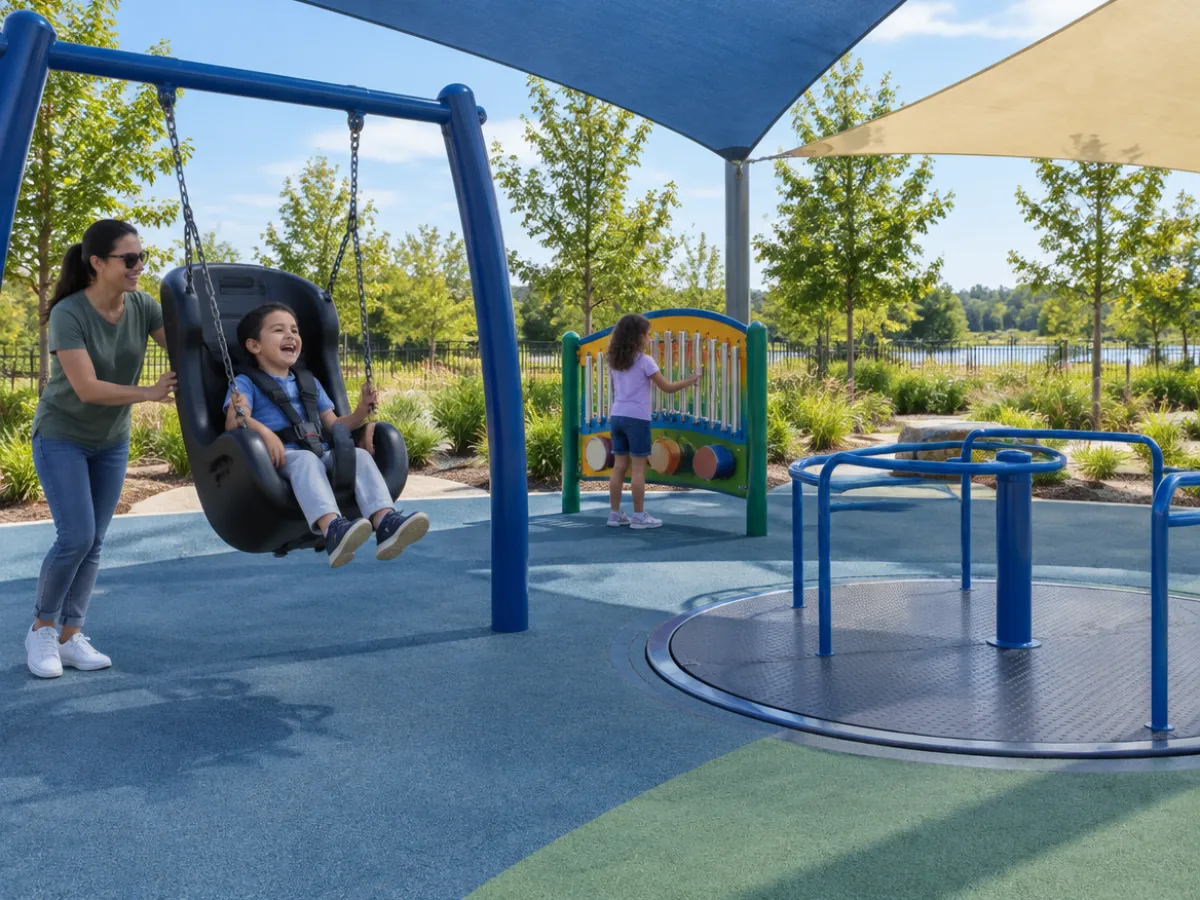
Inclusive playgrounds go beyond that minimum. Look for wide ramps that reach the top deck, roller slides that do not build up static (important for cochlear implants), high-back or platform swings, a merry-go-round flush with the ground, sensory and music panels at seated height, shade, and a fenced edge or quiet corner for kids who get overwhelmed.
Before you go
- Check the surface. "Accessible" on a map often means the route and some equipment, not every corner of the playground.
- Ask about accessible parking and restrooms. They are not always next to the playground.
- Go early on weekends. Inclusive playgrounds are popular and the adaptive swings fill up.
- Bring shade and water in summer. Rubber surfaces get hot in direct sun.
Sources: OpenStreetMap contributors and official city and park department pages. Missing a playground? Tell us through the suggestion form.
Frequently asked questions
What is the difference between an accessible and an inclusive playground?
An accessible playground lets a child using a wheelchair or walker reach the play area and at least some equipment, mostly through ramps, transfer stations and a firm surface. An inclusive playground goes further: it is designed so kids of all abilities can play together, with things like wide ramps to the upper deck, adaptive swings, ground-level spinners, sensory panels and quiet spots.
Are public playgrounds required to be wheelchair accessible?
Yes. Under the 2010 ADA Standards for Accessible Design, public playgrounds built or altered since March 15, 2012 must meet accessibility rules for play areas: an accessible route to the equipment, a share of ground-level and elevated play components on that route, and surfaces that a wheelchair can roll on. Older playgrounds only have to comply when they are rebuilt or altered.
Which playground surface is best for wheelchairs?
Poured-in-place rubber, rubber tiles and synthetic turf are the easiest to roll on. Engineered wood fiber can meet the rules when it is kept level and topped up, but loose chips shift fast. Sand and pea gravel are hard for wheels and walkers.
How many accessible playgrounds do you list?
1,082 in 50 states: 347 inclusive, 11 with a sensory focus, 555 mapped as wheelchair accessible and 169 partly accessible. Most are in California (167), New York (88), Illinois (51).
Where does the information come from?
From OpenStreetMap (playgrounds and equipment tagged as wheelchair accessible, inclusive or sensory) and from city and park department pages. We do not visit the playgrounds ourselves, so features on site can differ. If you know a playground we are missing, use the suggestion form.